Jan 21, 2026 · 3 min read
I went to AIAA SciTech as a startup founder and it changed what I paid attention to
SciTech ended last week. I'm still processing new ideas and the connections I made.
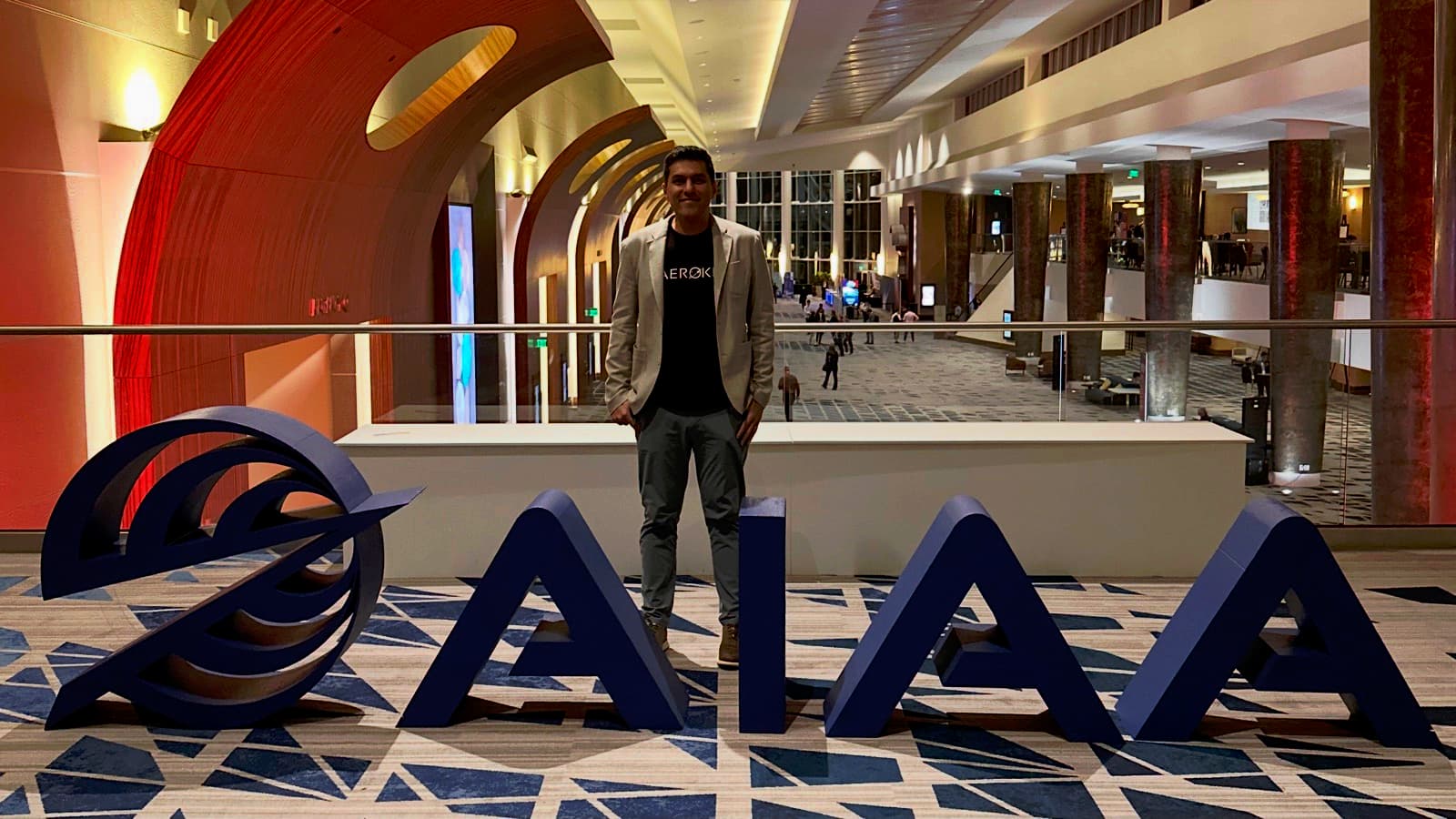
This year, around 6,000 people attended the forum. There were 115 exhibitors and 21 sponsors. The event included hundreds of speakers. It also had the largest technical program ever, with 2,938 technical paper presentations across 635 technical sessions.1
That scale matters because SciTech is not one conference. It's many conferences in one building. You can spend a full day in one track and still miss entire worlds two hallways away.
I've attended SciTech before as a fluid mechanics researcher. Back then my week was simple. I picked sessions close to my work. I chased papers I wanted to read. I tried to meet the people I had been citing for years.
This time I showed up as a software founder. That changed my focus. I listened less for new equations and more for friction in the workflow. I asked what slows teams down. I asked what gets repeated. I asked what breaks when something changes.
Here's what I heard from four different groups:
-
Aerospace software teams shared how hard it is to ship modern tools in this industry. Program timelines are long. Trust requirements are high. Tool stacks don't change quickly.
-
System engineers kept coming back to model based workflows. They care about traceability. They want faster ways to see the impact of changing a parameter. They want validation that stays clear and repeatable.
-
Hardware engineers described a grind I know well. Time disappears while hunting for data. Calculations get rebuilt in spreadsheets. Work repeats because inputs, assumptions, and results live in too many places.
-
Suppliers brought up a different bottleneck. Many want access to engineers. They struggle to reach them at the right time. That gap slows both sides.
My main takeaway is simple. Aerospace wants faster cycles, but it won't trade rigor for speed. People want speed with proof. They want workflows that are easy to review and easy to trust.
I left encouraged because these pain points are shared and spoken out loud. That's a sign the community is ready to change. And for AeroKit, it was a strong signal that the problems we're working on are real and widely felt. More on that later..
Lastly, I did a quick counting on some selective keywords that appeared across the technical program:
| Keyword | Mentions |
|---|---|
| Artificial Intelligence | 262 |
| Digital Twin | 99 |
| MDO | 74 |
| MBSE | 50 |
| LLM | 44 |
| RAG | 35 |
| Digital Thread | 34 |
| Generative AI | 29 |
| MCP | 7 |
These numbers show where the community's attention is focused and hint at where aerospace engineering is heading.
References
Footnotes
-
AIAA SciTech 2026, https://scitech.aiaa.org ↩